You have no items in your shopping cart.
The Largest Hostas in the World: 10 Giant Hostas That Will Transform Your Garden into a Botanical Paradise Text: Eurohosta, Photos: D. Zúbriková, Vladimír Mirka, Gerrie Veenstra, Jeff Miller, Brian Skaggs, Depositphotos, June 2026
|
BLOG: Did you enjoy this article? Read more of our articles »»» |
||||
|
If you are looking for the largest hostas for your garden, you are in the right place. Giant hostas are among the most sought-after shade perennials. At maturity, they can form clumps more than 2 metres across, with leaves that resemble huge plates. In this article, we look at which hostas grow to the largest size, why they are so popular, and which cultivars, based on our many years of experience at Eurohosta, belong among the true giants. Why are giant hostas so popular?Large hostas can create an effect in the garden that is difficult to replace with other plants. Their main advantages are:
It is no coincidence that large hostas are among the most desirable plants in modern gardens. Not every hosta will become giant in every gardenThe size of a hosta is not determined by the cultivar’s genetics alone. Genetics define the potential, but whether the plant reaches it depends on growing conditions. That is why the same hosta can be enormous in one garden and only half the size in another. Soil quality and depth Hostas develop a strong root system. In deep, humus-rich, fertile soil they can take up more water and nutrients, resulting in larger leaves and a greater overall clump size. In poor or stony soil, they remain considerably smaller. Plenty of water Hostas are plants with a high demand for water. Large cultivars can transpire several litres of water per day during summer. If a plant suffers from drought, it produces smaller leaves and growth slows down. Consistent moisture throughout the season is one of the main factors influencing hosta size. Competition from tree roots This is one of the most common reasons for disappointment among growers. A hosta planted under a birch, spruce or maple has to compete for water and nutrients with thousands of tree roots. Even a giant variety may then remain surprisingly small. Amount of light Most hostas thrive in partial shade. Very deep shade often leads to slower growth. By contrast, gentle morning or evening sun encourages the formation of larger clumps. The exceptions are some blue hostas, which lose their waxy bloom in strong sun. Age of the plant Many hostas reach their true size only after 8 to 10 years. A young plant bought from a nursery often looks modest, but after several years it can become a huge clump. Regular division If you divide a hosta frequently, you keep returning it to a “young age”. The plant then invests energy in rebuilding its roots rather than increasing the size of the clump. The largest specimens are usually those that have not been transplanted for decades. Fertilising A good supply of nutrients supports the production of large leaves. The best results come from adding compost or well-rotted organic matter every year. Excessive nitrogen fertilisation, however, can cause soft tissues and greater susceptibility to damage. Climate Hostas originate from regions with ample rainfall and moderate summer temperatures. In cooler and moister regions, they often grow larger than in hot, dry areas. An interesting paradox Many growers believe that hostas need deep shade. In reality, the largest specimens often grow in places with morning sun, rich soil and plenty of water. It is precisely the combination of light, moisture and nutrients that allows the plant to use its genetic potential fully. For example, Hosta 'Empress Wu' may reach 120 cm across in one garden and more than 250 cm in another. The difference is not in the variety, but in the conditions provided by the grower. The largest hostas in the world according to expert sourcesAmong the cultivars most often listed in international rankings of the largest hostas are:
These varieties are widely known for their ability to form massive clumps, often over 80 cm tall and more than 2 metres wide.
Hosta 'Sum and Substance' is an older variety with excellent growth potential
Hosta Giantland Megalodon came to Europe from the USA.
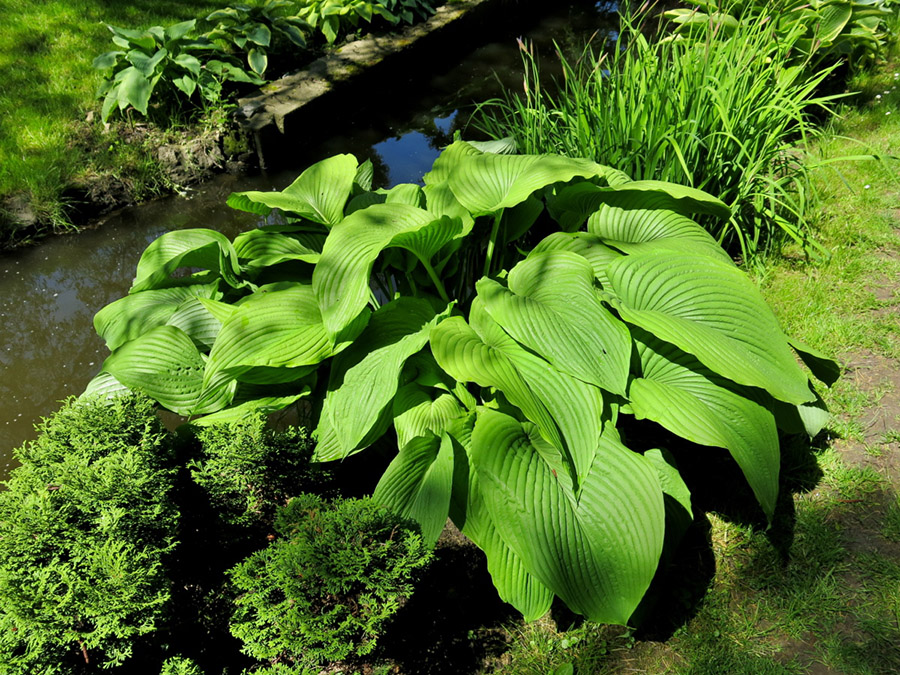
Hosta 'Green Acres' with green, arching leaves never disappoints. Beautiful near a water feature!
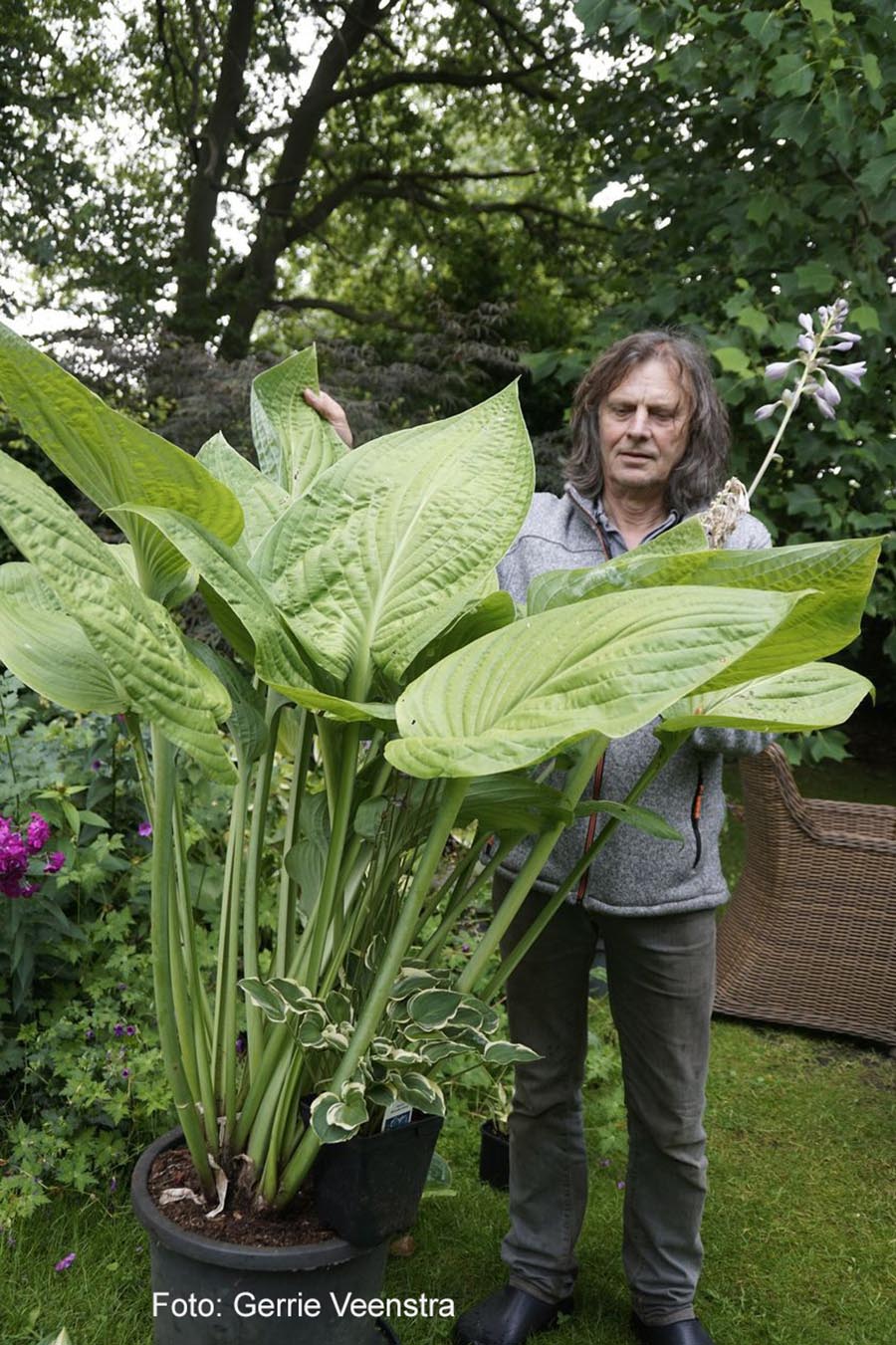
This giant has upright growth and unstoppable vigour – hosta Holar Arches Park. 10 largest hostas according to our experience at EurohostaOver the years, we have grown thousands of hosta cultivars and regularly observe their growth in different conditions. Some varieties genuinely surprise us with their impressive size. We agree with the selection often presented by international magazines and experts (see the ranking above), but we also have our own favourites. Here is our ranking of hostas that are among the largest in our growing conditions:
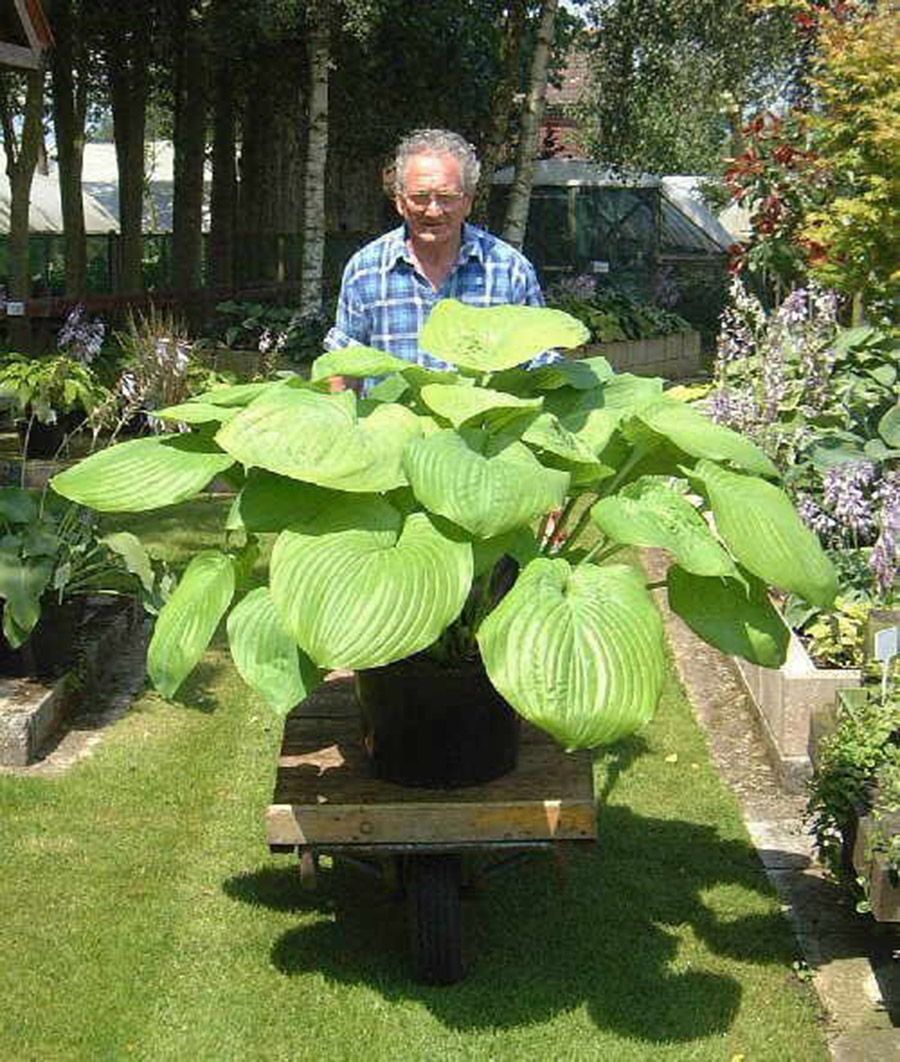
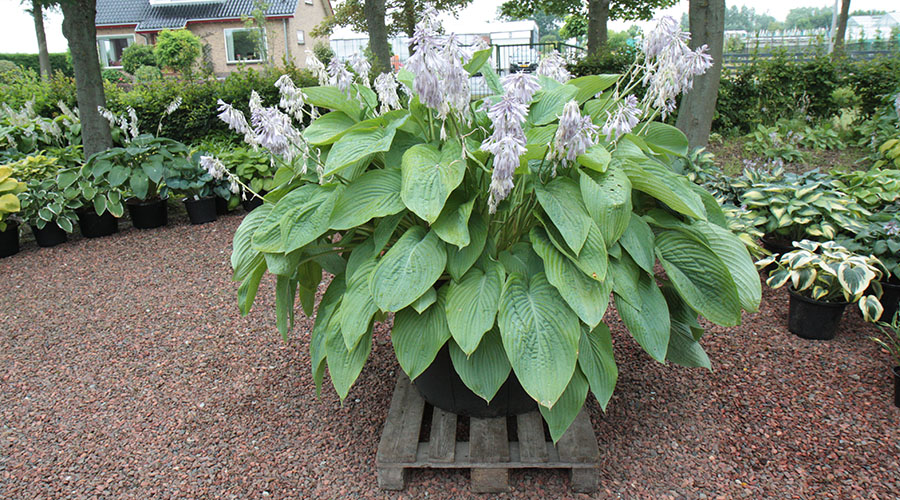 Hosta 'Empress Wu' is a legend among giant hostas. More about this cultivar here.
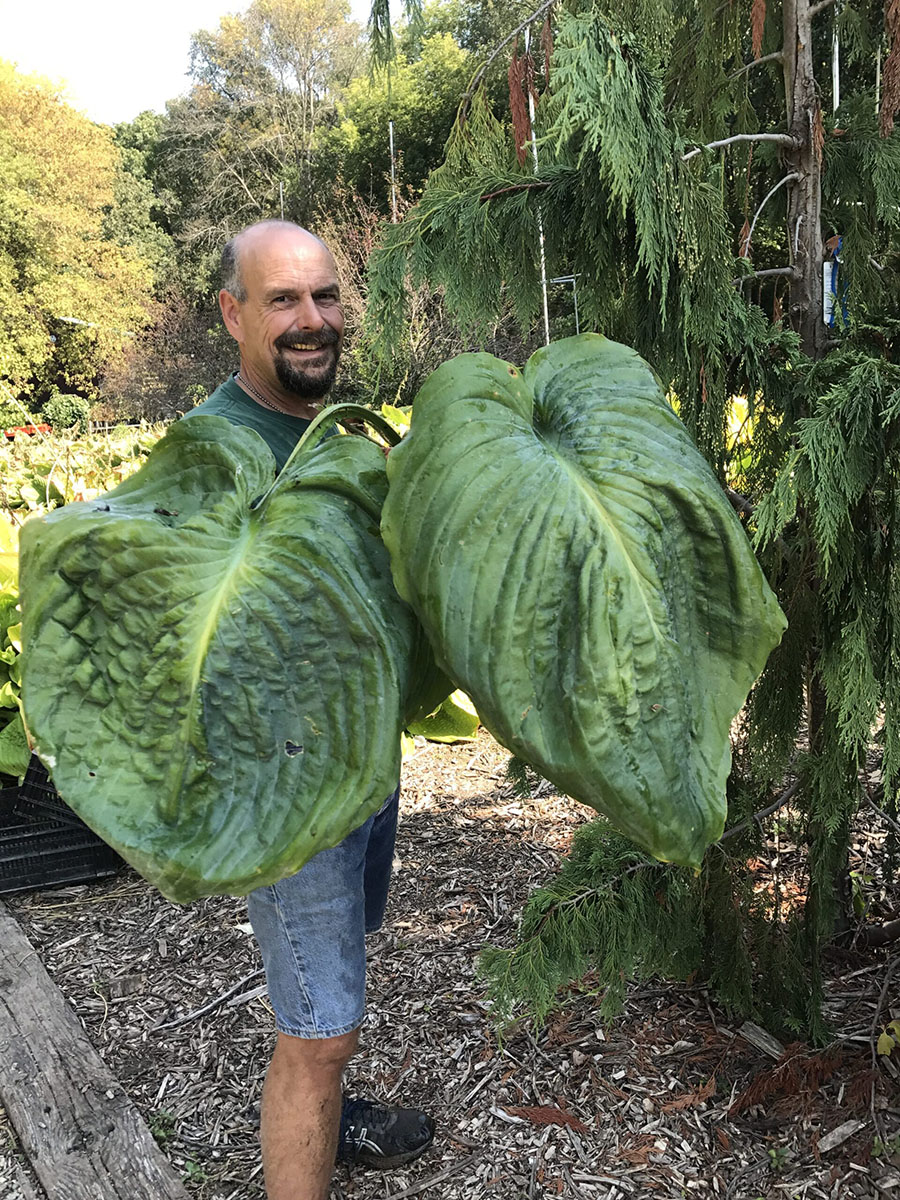 Hosta 'Giantland Big Bastard' really is quite a “bastard”. Even slugs do not dare touch it; it eats them as an appetiser before mice and small cats... :-)
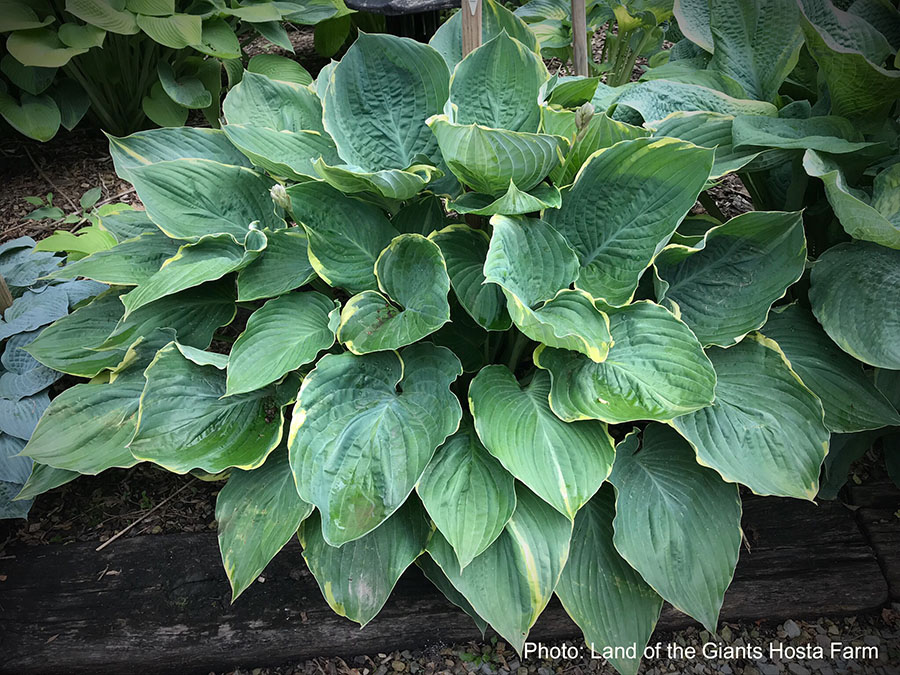 Hosta Giantland Butterfly Wings grows very well in our garden and, with enough moisture, commonly reaches 80 cm in height.
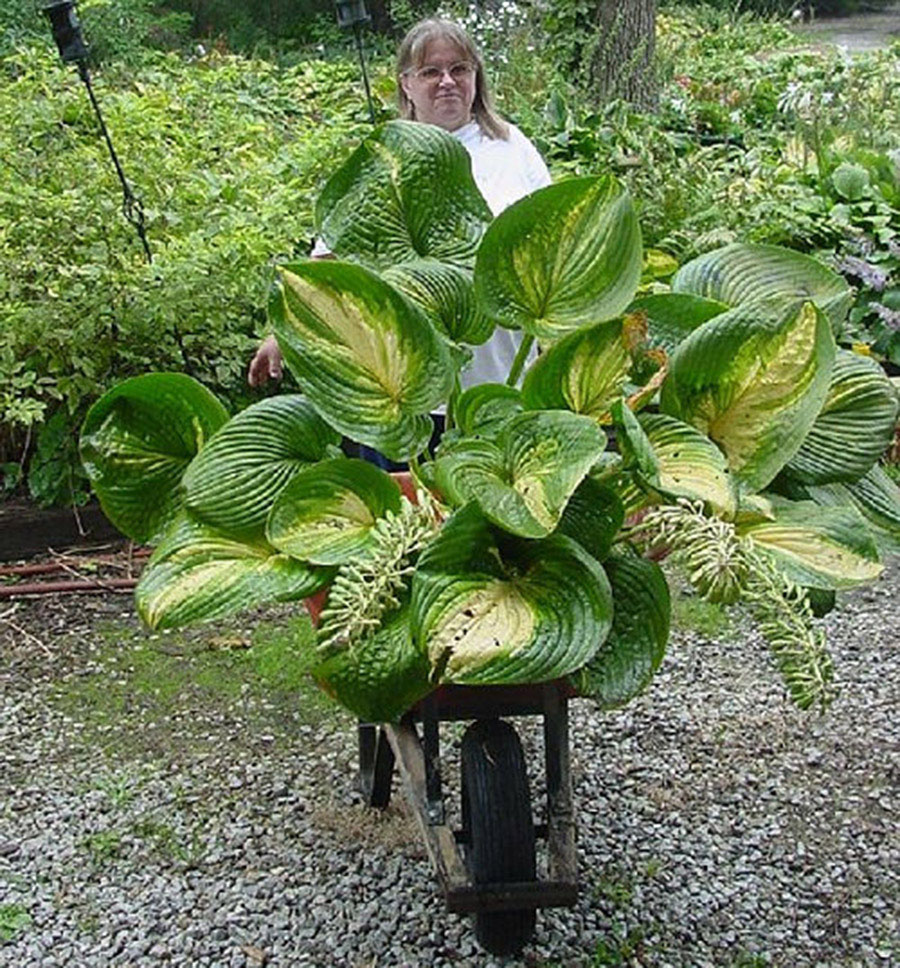 The older hosta variety Big Kahuna is generally considered the largest bicoloured hosta. In our garden it is not quite that large, probably because our short growing season does not suit it.
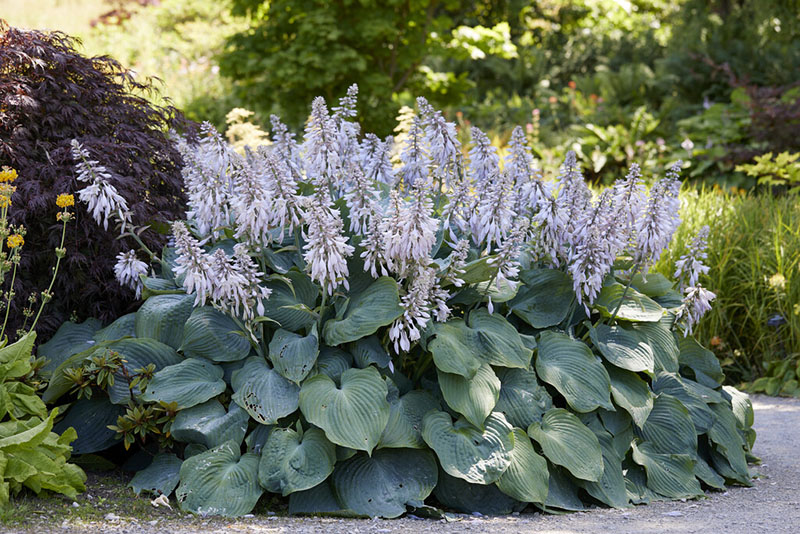 Among the older, largest and also most beautiful giant hostas is hosta Blue Angel. It also grows unstoppably in our garden...
How to grow a giant hosta? 3 proven tipsGive it plenty of space Large hostas do not like competition. If you want them to reach maximum size, give them enough room. Feed regularly with compost The largest hostas grow in soils rich in humus. An annual layer of quality compost can significantly boost their growth. Never let them dry out Hostas produce an enormous amount of leaf mass. Without enough water throughout the season, they cannot make full use of their genetic potential.
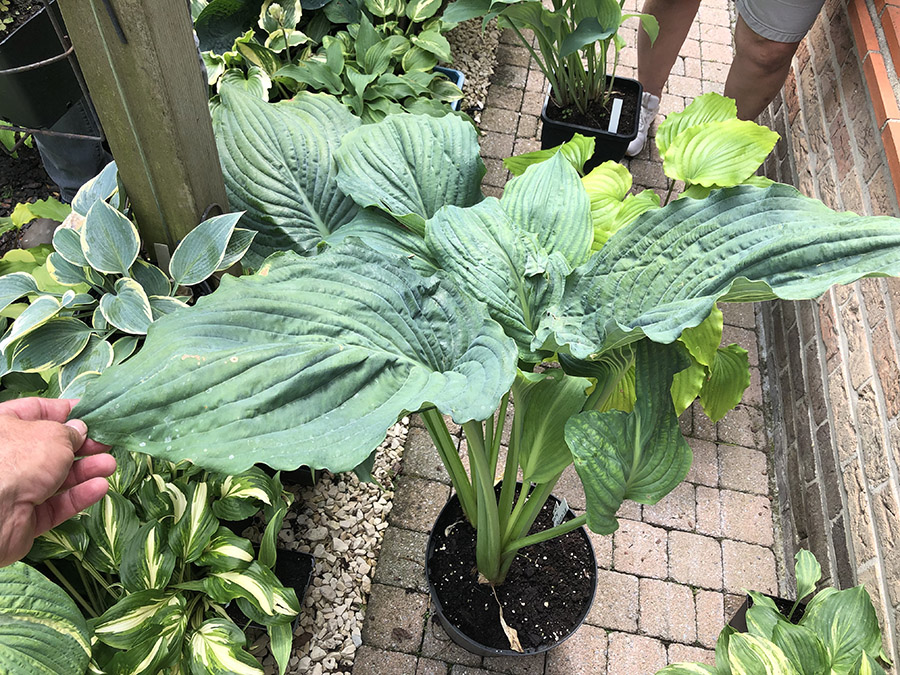
Hosta Valley's Salty Crocodile is one of the lesser-known giants. Conclusion: Which hosta is the largest?If we had to choose a single king among hostas, it would probably still be Hosta 'Empress Wu'. Nevertheless, there are several cultivars that, under certain conditions, can match or even surpass it in size. Our experience shows that varieties such as Hosta 'Lakeside Maverick', Hosta 'Blue Angel' and Hosta 'Giantland Big Bastard' can, after years of cultivation, reach truly impressive dimensions. If you dream of a garden with a monumental look, giant hostas are among the best investments. All they need is time, quality soil and enough water. In a few years, they will become the focal point of your garden and will be admired by every visitor. © This text is protected by copyright. Both text and photographs are protected by Act No. 618/2003. Copying is prohibited. |
|
|||
|
BLOG: Did you enjoy this article? Read more of our articles »»» |

% SALE %
-
Siberian Iris Double Standard
Regular Price: €4.19
Special Price: €2.93
-
Smash Hit
Regular Price: €11.49
Special Price: €8.04
-
Texas Blue Eyes
Regular Price: €5.69
Special Price: €3.98
-
Tropical Island
Regular Price: €4.49
Special Price: €3.14