You have no items in your shopping cart.
How to Create an Impressive Hosta Garden – Garden Bench | Text: Eurohosta, Photos: Istockphoto, Depositphotos, December 2025
|
BLOG: Did this article interest you? Read more of our articles »»» |
||||
|
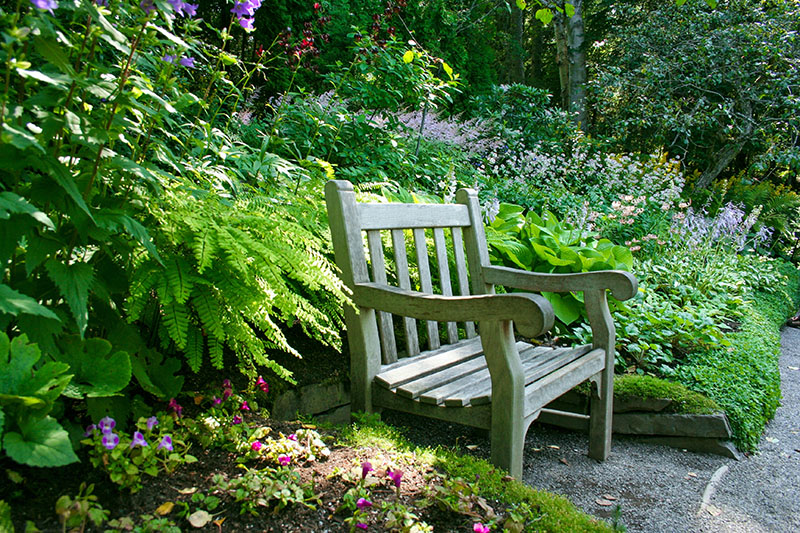
Hostas in the garden – by the bench A garden bench is not only a place to sit. It is a place to pause, to rest, to think, to read, to meet, to nap, to observe… Often it is the point where you take a short break from garden work, sit down, look around, and let your thoughts drift. In a well-designed garden, the bench is often the quiet center of the space – a place with a pleasant view, the right degree of privacy, and a welcoming atmosphere. That is exactly why its surroundings deserve thoughtful planning. And few plants can fulfill this role as naturally and harmoniously as hostas. Hostas create calm, soft, and balanced compositions. Their broad, often gently arched or wavy leaves feel soothing, catch diffused light, and elegantly fill the space around a bench without appearing intrusive or aggressive. In partial shade and shade, where garden benches are most often placed, hostas feel perfectly at home. Here they can show their full beauty – leaf color, texture, form, and volume.
Example 1. A calm, naturally looking woodland planting in which the garden bench is sensitively set into the greenery as a place of rest and silence. The composition does not feel decorative for its own sake, but organic – as if the bench had always been part of the garden. Leaf textures dominate, with various shades of green and soft transitions rather than sharp contrasts. A hosta with broad, fresh green leaves is planted near the bench – Hosta ‘August Moon’. They visually soften the bench, create a calm frame at eye level when seated, and naturally connect the bench with the rest of the bed. Ferns with finely divided foliage contrast with the large hosta leaves and enhance the woodland character of the planting. Taller perennials with delicate flowers, such as lilies, astilbes, Astrantia, and bellflowers (Campanula), create an airy, almost “misty” layer above the foliage. In the foreground, ground-cover plants dominate – heucheras and tiarellas, which soften the transition to the path and complete the overall harmony. The bench is not the center of attention here, but a natural part of the garden. The space around the bench as a green refuge When designing planting around a bench, it is important to think about the feeling you want the place to evoke. The bench should not look like a solitary object in the middle of a bed, but like a natural part of a living composition. Hostas work beautifully in this respect – they can gently “tie” the space together and create a sense of shelter and calm. Layering is essential. In the background, use taller and more expressive hosta cultivars to create a green backdrop behind the bench. This rear layer brings a sense of protection, softens the surrounding space, and helps focus attention inward. In front of it, medium-sized hostas with contrasting leaf patterns – variegated, blue, or strongly veined – work well. They create visual interest at eye level when seated. At the very front, use low, compact varieties that soften the transition to a path or lawn and do not get in the way when moving around the bench. The result is a natural “green room” in which you feel protected, relaxed, and slightly removed from the bustle of the garden.
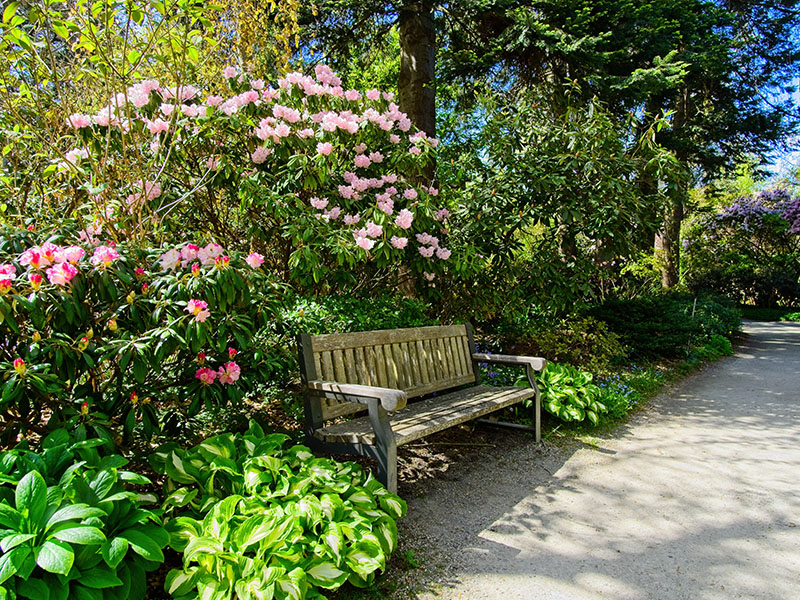
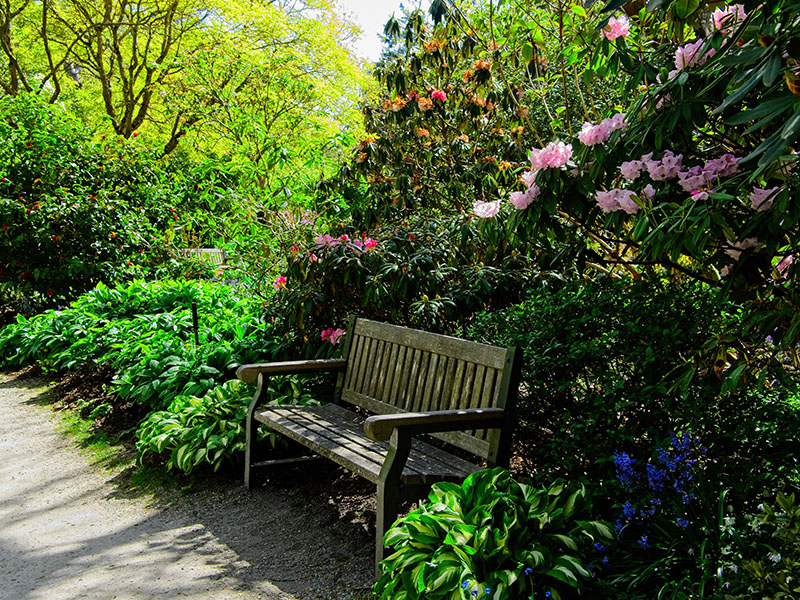
Example 2. A park-style composition. Pink and deep pink-red rhododendrons under tall conifers, complemented by low azaleas and boxwood. The bench is flanked by two clumps of Hosta Undulata Univittata. Large hellebore leaves complete the composition. • Behind the bench – tall, dominant hostas (green backdrop, a sense of protection, silence, and refuge) • Middle layer – hostas at eye level when seated (visual interest, leaf pattern, color) • Front line – low hostas near the bench feet (softening the space, practical, nothing gets in the way)
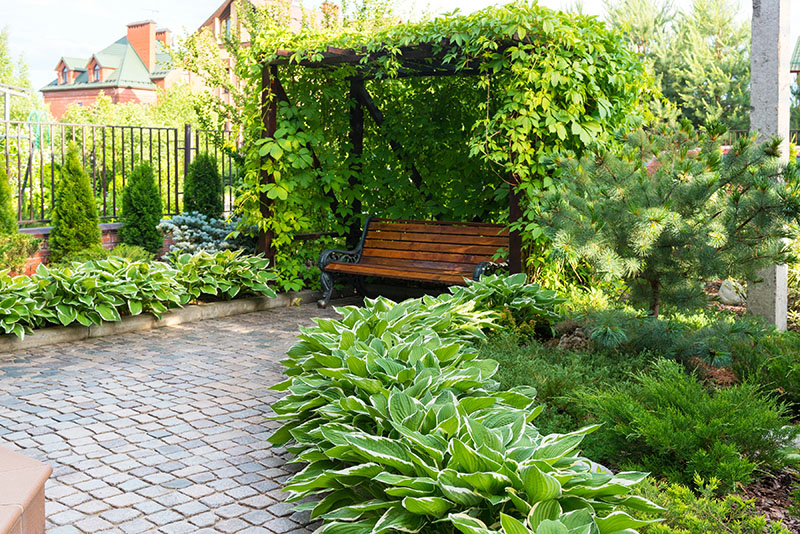
Example 3. The dominant element is clumps of hosta ‘Francee’ with green leaves edged in white, which line the beds toward the bench. They visually guide and invite the visitor to sit down. The bench is placed under a pergola covered with a climbing plant – Virginia creeper (Parthenocissus quinquefolia), which provides pleasant shade and gives the spot a sense of intimacy. The composition is complemented by conifers – a pine, shrubs of Juniperus, Picea pungens ‘Glauca’, and arborvitae ‘Smaragd’, which separate the area from the neighboring garden and, as they mature, will contribute even more to the privacy of the place. • Bonus – hostas with pleasantly fragrant flowers by the bench (a gentle scent, evening atmosphere) • A practical design tip
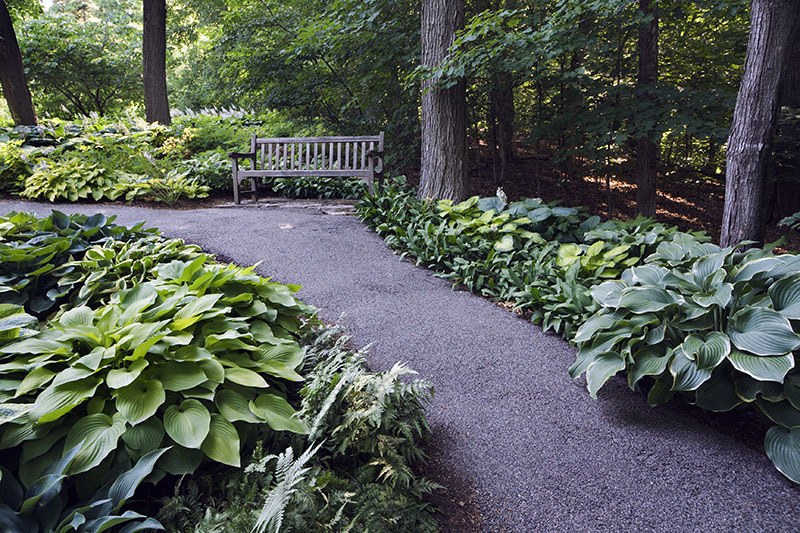
Example 4. A calm woodland-style composition with a garden bench placed in partial shade under tall deciduous trees. The dominant plants are hostas with large, fresh green to blue-green leaves. The planting includes Hosta ‘Blue Angel’ – right in the back (in bloom), the blue ‘Halcyon’, and blue-and-white ‘Tom Schmid’ (far right). The border between the path and the beds is formed by a patch of wild garlic – Allium ursinum. The planting is complemented by ferns, whose fine texture contrasts with the massive hosta leaves and strengthens the woodland character of the space. The path creates a clear axis in the composition and at the same time keeps the planting tidy and easy to read. The whole scene feels harmonious, quiet, and natural – a place meant for slowing down and resting.
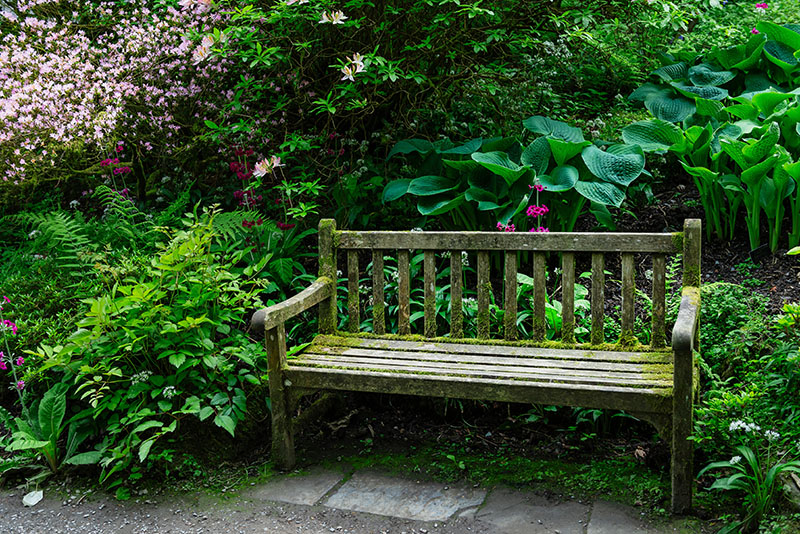
Example 5. A woodland composition in a strongly shaded spot. The dominant plants are Sieboldiana Elegans hostas with large blue leaves, forming the main mass behind the bench and giving the space stability. The composition is complemented by ferns, astilbes, and wild garlic. In the background there are flowering shrubs that add a seasonal accent of color. The weathered bench is a natural part of the woodland setting. Gentle combinations with other plants Hostas look their best when they are not overwhelmed by too many different plants, but when they have companions that complement them in shape, texture, or color rather than compete with them. A mixed border suits them very well, but the foundation is restraint and a calm structure. Ferns are especially suitable, as their fine, feathery foliage creates an ideal contrast to the broad leaves of hostas. Good choices include Dryopteris, Athyrium, or Polystichum. Ferns are natural, unobtrusive, and support the woodland character of the space by the bench. Lady’s mantle (Alchemilla mollis) is especially suitable for the front of the planting. Its soft leaves and delicate flowers create a calm transition between hostas and a path or lawn, without looking disruptive. Among perennials with more noticeable flowers, irises work well – especially Siberian irises, which bloom when hostas are still unfurling their leaves. Their upright form adds a vertical element to the composition without taking up much space. Heucheras are suitable as a color accent, especially in smaller groups. Dark-leaved cultivars highlight light or variegated hostas, but they should be used with care so the result does not become too busy. Japanese forest grass (Hakonechloa macra) looks excellent by a bench – but be careful: it is sensitive and needs warmth, so it is not suitable for mid and higher elevations. If there is more light around the bench and the soil is drier, lavender or daylilies can be an excellent choice. Astilbe is also an ideal companion to hostas. It is exceptionally beautiful, but rather sensitive, which is why repeated plantings often fail in gardens. There can be many reasons, but perhaps the most common is that the soil must never dry out. This perennial has very high water demands. If you have enough space near the bench, you can also add larger shrubs and small trees to frame the area and strengthen the feeling of shelter. These work particularly well: The garden is also about emotion Garden design is not only about lines, materials, and plants. Above all, it is about the feeling a space evokes in us. A bench surrounded by hostas does not feel like a solitary feature, but like a natural part of a living composition. It is a place where you sit down, slow down, and let the garden speak quietly – through leaves, light, shade, and calm.
Example 6. This composition is built on the contrast between calm greenery and simple garden furniture. The dominant plant element is the striking variegated hosta Hosta ‘Sagae’ with yellow-green leaves, forming a soft, voluminous mass in the foreground and naturally leading the eye toward the bench. The background is a dense green wall of climbing ivy, providing privacy, shade, and a calm microclimate. The bench is intentionally simple and understated so it does not distract and allows the planting to stand out. The whole scene feels harmonious, enclosed, and invites quiet rest in the shade.
Example 7. A garden bench among hostas.
A colorful planting next to the garden bench – Hosta We Back the Badge (in the middle), Hosta Giantland Butterfly Wings (top left), Hosta Seducer (top right) and Hosta Glad Rags (far right bottom). © This text and photos are protected by intellectual property rights under the Law no. 618/2003 Coll. (the Copyright Act). |
||||
|
BLOG: Did this article interest you? Read more of our articles »»» |


% SALE %
-
Paeonia Celebrity
Regular Price: €9.99
Special Price: €6.99
-
Smash Hit
Regular Price: €11.49
Special Price: €8.04
-
Stephen King
Regular Price: €10.99
Special Price: €7.69
-
Siberian Iris How Audacious
Regular Price: €4.29
Special Price: €3.00